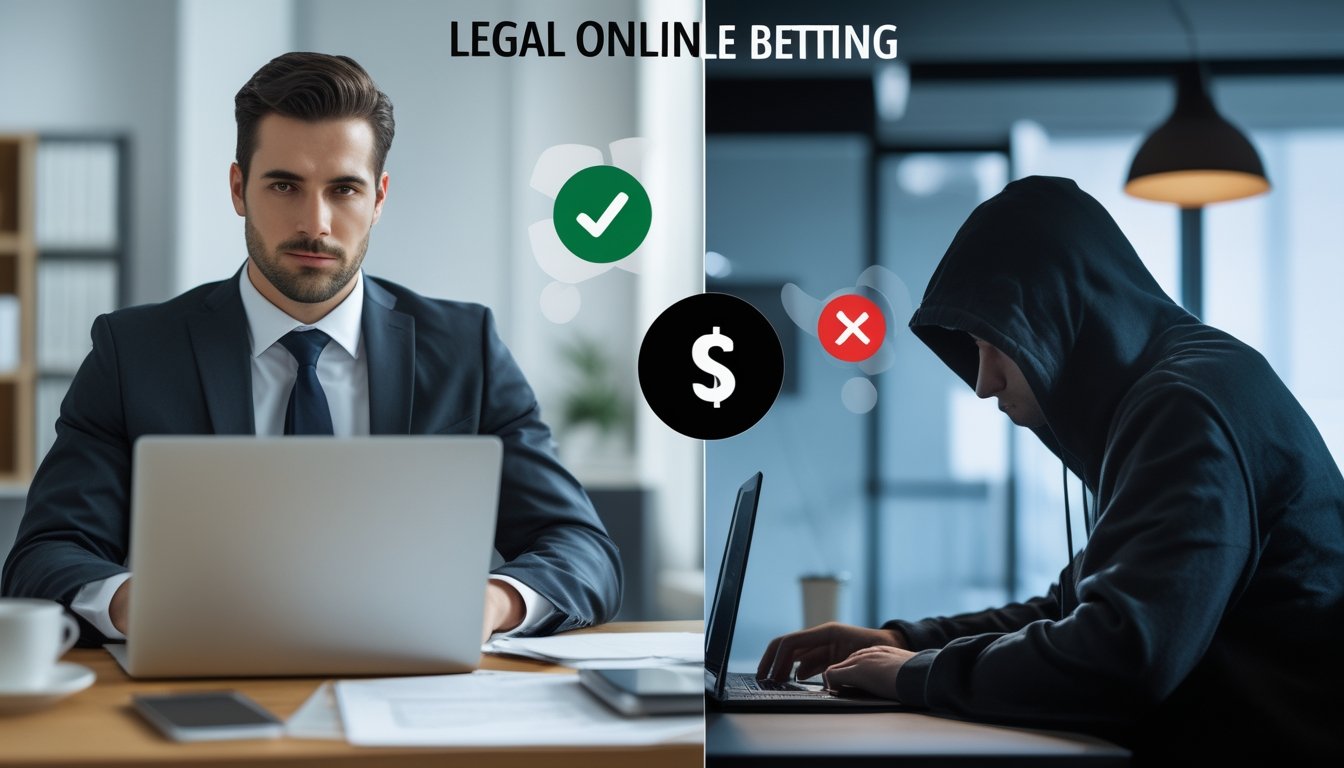
You can start playing online with very little money and minimal hassle by choosing platforms that accept small deposits and process payments instantly. Pick sites that allow low-value deposits (even as little as a few thousand rupiah) and offer fast, transparent transactions to turn a quick top-up into immediate play. This article shows how to find those platforms, how deposits and withdrawals work, and which games suit a small budget.
Expect step-by-step guidance on deposit methods, verification-free or account-lite options, and tips for picking trustworthy sites that actually pay out. You’ll also learn how to stretch a small balance, manage risk, and spot features that make gambling simple and secure while staying within responsible limits.
Understanding Easy Online Gambling
You’ll learn what makes a gambling site genuinely simple to use, how quick registration saves time, and which platform features matter most for smooth play. Focus stays on practical elements: deposits, verification, navigation, and responsible controls.
What Makes Online Gambling Simple
Simplicity starts with clear, minimal steps to start playing. Look for sites that accept low deposits (like $1–$10 or small local amounts), show accepted payment methods up front, and list processing times clearly so you know when funds will be available.
Transparent verification matters. Sites that use automated ID checks or accept verified digital IDs let you deposit and withdraw faster. Avoid sites that require repetitive document uploads or long manual reviews; those add friction and waiting time.
Game selection should be organized by category and provider. If you can filter by “slots,” “live casino,” or developer, you’ll find games faster. Finally, plain-language terms for bonuses and wagering requirements reduce confusion and prevent unexpected restrictions on your funds.
Benefits of Streamlined Registration Processes
A fast registration flow reduces friction and gets you to gameplay quickly. Prefer one-page sign-ups or social/ID-based logins that pre-fill details, so you don’t copy the same data multiple times. Mandatory fields should be limited to what regulators require: name, birthdate, and contact.
KYC that integrates with banking or trusted third-party services speeds verification. When a site flags exact reasons for additional checks, you can fix issues without back-and-forth support messages. That means fewer delays when you want to deposit or withdraw.
Security should remain intact even when registration is fast. Two-factor authentication and HTTPS protect your account and payment data. You benefit from both speed and safety when operators balance minimal data collection with strong encryption and fraud monitoring.
User-Friendly Platform Features
Interfaces should be intuitive on both desktop and mobile. Look for visible deposit/withdraw buttons and a persistent balance display so you always know available funds. Responsive menus and large touch targets make navigation simpler on phones.
Search and filtering tools matter for game discovery. Use filters by volatility, RTP, or provider to narrow options quickly. Clear game previews, demo modes, and information icons help you assess a game before staking real money.
Practical account tools enhance control: quick deposit presets, withdrawal history, and self-exclusion options. Real-time chat support and FAQ sections tailored to local payment methods (like QR payments or regional e-wallets) cut resolution time when issues arise.
Minimum Deposit Requirements Explained
Minimum deposits set the smallest amount you must add to start playing and affect risk, bonus eligibility, and withdrawal speed. Knowing typical amounts, benefits, and how to choose a limit helps you control spending and optimize your experience.
Advantages of Low Deposit Options
Low deposits let you test platforms without committing large funds. You can open an account, try game mechanics, and evaluate payout processes with as little as a few currency units.
They reduce financial risk and make bankroll management simpler. If you prefer conservative play, low limits let you set strict caps and avoid fast losses.
Low-entry options often qualify you for small bonuses or trial promotions. However, check wagering requirements and withdrawal rules—some bonuses carry strings that negate their value.
Accessibility increases with smaller minimums. You can spread a fixed budget across multiple sites to compare user interfaces, speeds, and customer support before choosing where to stake larger amounts.
Typical Minimum Deposit Amounts
Minimums vary by region, currency, and payment method. Common ranges include:
- Micro deposits: $1–$10 (or equivalent) for e-wallets and prepaid systems.
- Standard low deposits: $10–$25 via cards or bank transfers.
- Higher thresholds: $25–$50 for certain fiat rails or entry-level VIP tiers.
Local markets sometimes allow deposits from very small units—examples include Rp 500 in Indonesia for some operators. Mobile wallet and voucher systems typically set the lowest thresholds.
Also consider payment fees and conversion rates. A $1 minimum can become costly if the operator charges a fixed processing fee or applies an unfavorable exchange rate.
How to Choose the Right Deposit Limit
Decide based on your budget, play style, and goals. If you want to learn games, start with micro deposits; if you aim for larger wins, pick a mid-range minimum that lets you build a meaningful bankroll.
Check the site’s bonus terms and withdrawal policies. Ensure the deposit level you choose actually unlocks the promotions you want and doesn’t block withdrawals with excessive verification tiers.
Compare payment options and fees across providers. Favor methods with low processing costs and fast clearing times to avoid losing value on small deposits.
Set personal limits and stick to them. Use site tools or your own budgeting approach to prevent escalating stakes once you win or chase losses.
Fast Transaction Processing
You’ll see deposits reflected in minutes with common methods like e-wallets, bank transfers, and QR payments. Withdrawals can be near-instant when the operator supports same-day payouts and you meet verification requirements.
How Quick Deposits Work
Quick deposits use payment rails that minimize manual steps. E-wallets (GoPay, OVO, Dana), QRIS scans, and real-time bank transfers post almost instantly because they route through fast-switch networks rather than batch clearing systems.
You should pick providers that display transaction status and a clear reference number. That helps you confirm the deposit immediately if a support ticket becomes necessary.
Low minimums (e.g., IDR 500) rely on micropayment compatibility and automated crediting. Automated systems read your payment reference and apply funds without human intervention.
Check the operator’s deposit page for supported channels, processing windows, and any auto-retry logic for failed attempts to avoid delays.
Instant Withdrawals and Payouts
Instant withdrawals depend on two things: the operator’s liquidity policy and the payout channel you choose. Wallet-to-wallet transfers and Instant Debit rails (if available) typically clear within minutes, while standard bank transfers may take a few hours during business hours.
You must complete KYC and link the same account used for deposits to prevent holds; mismatched details often cause manual review.
Operators sometimes impose processing limits, daily caps, or anti-fraud holds for large sums. Look for clear cutoff times and expected ETA on withdrawal pages so you can plan access to funds.
If you need faster access, prioritize operators that publish real-world payout times and maintain dedicated payout pools.
Ensuring Safe and Speedy Payments
Speed must pair with security: ensure the operator uses TLS encryption for all payment pages and tokenized payment references. This prevents interception and accidental exposure of account numbers.
Verify the presence of transaction logs in your account—timestamps, reference IDs, and channel used—so you can dispute issues quickly.
Watch for red flags like requests to pay via untraceable channels (personal accounts, unregistered wallets) or sudden changes in withdrawal rules. Report those immediately and keep screenshots of all transactions.
Use two-factor authentication on your account and avoid public Wi‑Fi when making deposits or withdrawals to reduce risk while maintaining speed.
How to Start Playing with Minimal Hassle
You will focus on quick registration, low first deposit options, and fast verification so you can start playing without delay. Follow the concrete steps below to register, fund, and verify your account efficiently.
Step-by-Step Guide to Registration and Deposit
- Choose a site with a clear “Sign Up” or “Register” button on the homepage.
- Use an email you control and create a strong password (12+ characters, mix letters, numbers, symbols).
- Avoid using work or shared addresses to keep account recovery simple.
- Complete the required fields: full name, date of birth, and phone number.
- Enter details exactly as shown on your ID to prevent verification delays.
- Opt into SMS or email verification for immediate account activation.
- Select a payment method that supports low minimum deposits.
- Look for e-wallets, prepaid vouchers, or local mobile payments with minimums like $1–$10.
- Check the deposit page for instant processing and no hidden fees.
- Make your first deposit and confirm the transaction.
- Start with the platform’s minimum to test withdrawal and gameplay.
- Save screenshots or transaction IDs until the deposit reflects in your account.
Verification Requirements Simplified
You will typically need ID proof and address proof; keep these ready before you deposit.
- Acceptable ID: passport, national ID, or driver’s license.
- Address proof: recent utility bill, bank statement, or government letter dated within 3 months.
Follow these practical tips:
- Upload color photos or PDFs, not scans, and ensure edges and text are visible.
- Match file formats to the site’s requirements (JPEG/PNG/PDF) and keep each file under the stated size limit.
Common verification steps:
- Selfie with your ID and a handwritten note stating the site name and date.
- Secondary checks might request proof of payment (screenshot of e-wallet or transaction receipt).
If verification fails:
- Review the platform’s rejection reason, correct the specific issue (crop, lighting, or mismatched data), and re-upload.
- Contact live chat and provide transaction IDs or filenames; ask for an expected processing time.
Selecting Trustworthy Online Gambling Sites
You should prioritize platforms that protect your money, verify fairness, and respond quickly when issues arise. Focus on clear licensing, strong security measures, transparent terms, and reachable customer support.
Key Criteria for Reliable Platforms
Check licensing details and operator identity first. Confirm the site displays a valid license number and the issuing regulator (e.g., Malta, UK, Curacao) and verify that number on the regulator’s site.
Look for transparent financials: clear deposit/withdrawal limits, processing times, and available payment methods (local bank transfer, e-wallets, or IDR-friendly options). Avoid sites that hide fees or give vague payout timelines.
Evaluate game fairness and audits. Prefer platforms with independent RNG or game-provider audit reports from eCOGRA, iTech Labs, or similar.
Scan user reviews for consistent themes: payout delays, frozen accounts, or bonus-abuse disputes. One-off complaints are normal; repeated, similar reports indicate risk.
Use practical UX checks: fast account verification (KYC), mobile-friendly interfaces, and clear terms of service with readable wagering requirements.
If minimal deposit and speed are your priorities, make sure the site lists a small deposit option and indicates instant or same-day withdrawals for the payment methods you plan to use.
Understanding Licensing and Security
Licenses indicate regulatory oversight and dispute channels, not a free pass to trust everything. Confirm the license issuer, jurisdiction, and any public disciplinary history.
Prefer regulators with transparent enforcement records; those offer clearer recourse if you face unfair treatment.
Verify technical security measures. Look for HTTPS with a valid certificate, up-to-date site seals, and published privacy policies that explain data handling and encryption.
Two-factor authentication (2FA) and device/withdrawal whitelisting are signs the operator prioritizes account protection.
Check payment safeguards. Reputable sites segregate player funds and use trusted payment processors.
If a site requires unusual upfront crypto-only deposits or refuses to disclose banking partners, treat it as higher risk.
Reviewing Customer Support Quality
Test support before depositing. Send an email and a live chat query about deposit/withdrawal limits or KYC steps, then note response time and clarity.
Fast, specific replies (within minutes on live chat; under 24 hours by email) suggest reliable operations.
Assess available channels and language support. Reliable platforms offer 24/7 live chat, responsive email, and phone support in the languages you use.
Also check whether the support provides written references to terms (screenshots or links) rather than vague assurances.
Review dispute and escalation procedures. A trustworthy site documents how to escalate complaints and names an independent arbitrator if internal resolution fails.
If support avoids providing a complaint reference number or refuses to explain the escalation path, consider that a red flag.
Popular Judi Online Games for Small Deposits
You can stretch a small bankroll by choosing games with simple rules, low house edge, or tiny bet steps. Focus on slots with low coin values, table games that allow minimum wagers, and quick-play options that don’t require large buy-ins.
Recommended Games for Beginners
Slots with adjustable coin value and paylines work well when you deposit a little. Pick video slots that let you set coin size to $0.01–$0.10 and reduce active paylines; this keeps each spin inexpensive while still letting you trigger bonuses.
Try classic 3-reel slots and single-payline machines first. They have straightforward rules and fewer decisions to make, so you learn game flow without risking much. Many casinos also offer demo mode — use it to practice before you commit real money.
Low-stakes baccarat and single-deck blackjack tables are good table-game entries. They require basic strategy or simple betting choices and often accept minimum bets equal to small deposit amounts.
Games with Low Betting Limits
Look for casino filters or lobby tags like “low minimum” or “penny slots” to find suitable titles quickly. Many licensed sites list minimum bet amounts on the game tile, so scan those labels before launching a game.
Penny and micro-stake slots commonly allow bets from $0.01 per line, so a full-spin cost can be under $0.50. Progressive jackpots exist at low stakes, but chances remain small; treat them as occasional upside rather than a plan.
Live dealer tables sometimes offer “low stakes” rooms with $1–$5 minimums. If you prefer faster rounds, electronic roulette and video poker variants often accept small fixed bets and provide clearer RTPs, letting you manage session length and expected loss more precisely.
Maximizing Benefits with Minimal Deposit
You can stretch a small deposit by choosing targeted promotions and using disciplined staking. Focus on bonuses with low wagering, games with high RTP, and deposit methods with instant processing to keep play continuous.
Promotions for Small Depositors
Look for bonuses specifically labeled for low deposits, such as “minimum deposit 10K” or “small stake match.” These offers often require a deposit as low as the platform’s stated minimum and give you free spins, matched credits up to a small cap, or cashback on losses.
Check the wagering requirement before you claim. Prefer bonuses with wagering ≤10× and caps on bonus conversion that let you withdraw modest wins quickly. Always verify eligible games; many bonuses exclude high-volatility slots or live dealer tables.
Use promos tied to payment methods that process instantly (e.g., e-wallets). That reduces downtime between claiming a bonus and wagering. Track expiry windows in a simple list: bonus name, deposit needed, wagering, expiry date.
Tips for Making Deposits Last Longer
Bet size discipline matters. Set a unit stake equal to 0.5–2% of your working bankroll for each spin or hand. Smaller units reduce variance and extend sessions, increasing your chance to find favorable rounds or triggered features.
Choose games with documented high RTP and low to medium volatility when you need steadier play. Table below gives quick choices:
- Slots: RTP ≥ 96% and medium volatility
- Blackjack/Video Poker: basic strategy reduces house edge
- Low-variance slots: longer small payouts, slower drain
Manage session time and stop-loss. Decide a loss limit and a win target before you start. If you hit either, cash out. Use bankroll segments: convert your total deposit into 4–6 portions and only risk one portion per session to avoid quick depletion.
Responsible Gambling Practices
You should set a strict budget before you deposit any funds and treat it as entertainment, not income. Decide a loss limit and a time limit, then stick to them without exceptions.
Use deposit limits, cooling-off periods, and self-exclusion tools if the platform offers them. These features reduce impulse spending and give you space to reassess your behavior.
Keep a record of your deposits, bets, and wins. Regularly reviewing this log helps you spot patterns and decide whether to adjust or stop playing.
Be aware that platforms are structured to favor the house; small deposits and fast play can accelerate losses. Understand the odds and avoid chasing losses—doing so typically increases the amount you risk.
If gambling affects your mood, sleep, relationships, or finances, seek support promptly. Contact local hotlines, counseling services, or use online resources for problem gambling help.
Quick reference:
| Practice | Action |
|---|---|
| Budgeting | Set daily/weekly deposit and loss limits |
| Time control | Use session timers and scheduled breaks |
| Platform tools | Activate deposit caps and self-exclusion if needed |
| Monitoring | Keep a simple log of activity and outcomes |
| Support | Reach out to professional services when signs of harm appear |
You should treat responsible gambling as an ongoing habit, not a one-time decision. Regular check-ins with yourself help keep play safe and sustainable.
Future Trends in Easy Online Gambling
You will see faster, more frictionless payment options become standard. Mobile top-ups, e-wallets, and carrier-billing reduce reliance on bank transfers and let you deposit with very small amounts.
Expect stronger use of automation for onboarding and verification. AI-driven ID checks and risk scoring will speed up account approval while aiming to meet compliance requirements.
Platforms will emphasize micro-deposits and modular game access. That lets you play with minimal risk and test services before committing larger sums.
Privacy-preserving technologies will grow in importance. Techniques like tokenized payments and limited data sharing give you more control over personal information while still enabling instant transactions.
Regulators and watchdogs will push for transparent monitoring of flows. You should notice more reporting and collaboration between financial authorities and operators to detect large illicit turnovers.
User experience will shift toward instant gratification without complexity. Faster load times, one-tap deposits, and streamlined cashouts will become baseline expectations for any service that wants to compete.
You will face a mixed landscape of legal responses across jurisdictions. Some markets will tighten controls; others will focus on harm reduction and safer-access models.
Key trend checklist:
- Faster mobile and e-wallet payments
- AI-driven verification and fraud detection
- Micro-deposits and pay-as-you-go access
- Privacy-focused payment engineering
- Increased regulatory transparency and monitoring